
TEALTH C100: Rethinking Dental Handpiece Maintenance
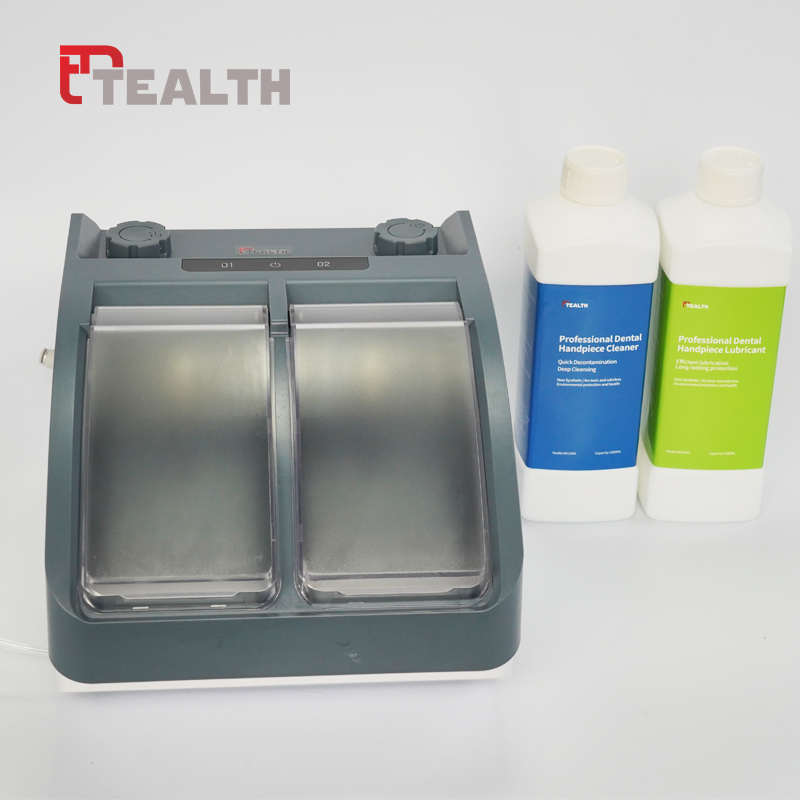
In most clinics, handpiece maintenance is treated as a background task—something that happens between patients but rarely gets scrutinized. That oversight is expensive. Bearing failures, chatter during cutting, and premature turbine wear almost always trace back to inconsistent cleaning and lubrication. The TEALTH C100 dental handpiece cleaning and maintenance machine addresses this problem by turning a variable, manual process into a standardized, repeatable cycle.
Beyond Manual Oiling
Spray-can lubrication has persisted because it is familiar, not because it is effective. When oil is applied manually, distribution is inconsistent. Some reaches the bearings; most coats the exterior or becomes aerosol. Under-lubrication accelerates wear; over-lubrication pushes excess oil into air lines and the operatory environment.
The C100 takes a different approach. As a dedicated maintenance machine, it uses a pressurized oil mist to deliver lubricant precisely where it is needed—inside the turbine head, around the bearings, and through the internal channels of each dental handpiece. Because the cycle is automated, results no longer depend on who is performing the task or how rushed the schedule is.
Cleaning Before Oiling: Why Sequence Matters
A true dental handpiece cleaning and maintenance machine must do more than inject oil. The C100 prioritizes internal cleaning before lubrication. Debris—blood, saliva, and fine particulate—is flushed from the narrow internal pathways first. Only then does the oiling machine function activate.
This sequence is critical. Lubricating a contaminated handpiece seals debris against metal surfaces, accelerating abrasion. By cleaning first, the C100 ensures that lubricant adheres to clean components, reducing friction and heat where it matters most. The result is quieter operation and measurably longer service intervals.
The Oiling Machine Function, Defined
While many users casually refer to the C100 as an oiling machine, its lubrication system is far more refined than manual sprays. Oil is atomized into a fine mist, allowing it to penetrate micro-gaps that liquid droplets cannot reach. Volume is fixed per cycle, eliminating over-oiling and the need for post-cycle wiping.
For clinics managing multiple dental handpieces, this consistency is valuable. Each unit—regardless of brand—receives the same internal coating. Over time, that uniformity reduces bearing-related repairs and stabilizes handpiece performance across the practice.
Compatibility and Workflow Integration
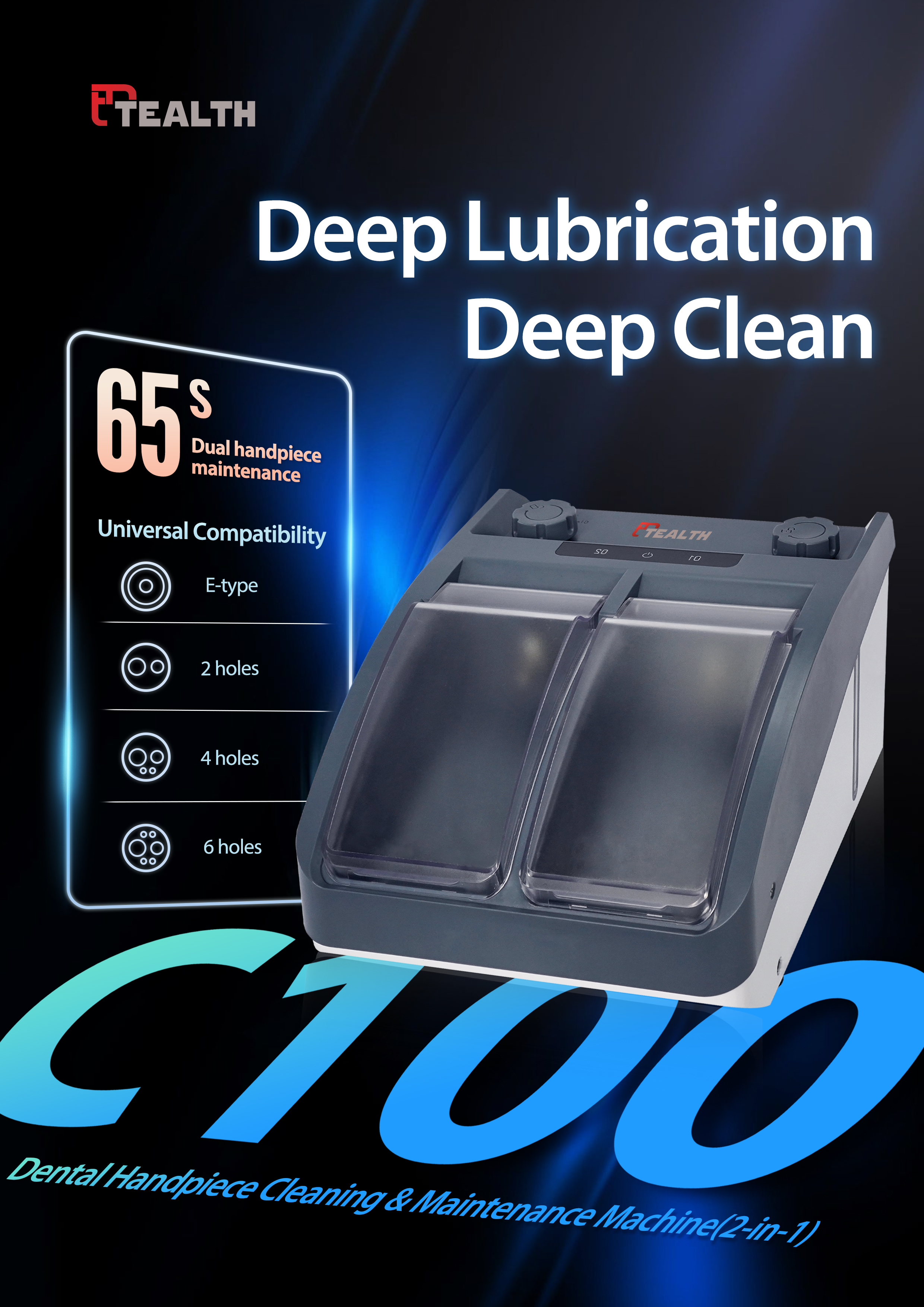
A common concern when adopting a new maintenance machine is compatibility. The C100 supports E-type connections and accommodates 2-hole, 4-hole, and 6-hole dental handpieces without additional adapters. This flexibility is especially relevant in multi-brand clinics where high-speed turbines, low-speed motors, and surgical handpieces coexist.
Workflow impact is minimal. After ultrasonic cleaning, handpieces are placed in the dual bays, the cycle is started, and staff move on to other tasks. Approximately 65 seconds later, two dental handpieces are cleaned, lubricated, and ready for pouching. By aligning with existing sterilization routines, the C100 avoids disrupting clinical flow.
Infection Control Advantages
Infection control discussions typically focus on surface disinfection and autoclaving, but internal maintenance plays an equal role. Manual oiling releases aerosols into the operatory, increasing cross-contamination risk. The C100 contains the entire process within a sealed chamber, capturing any expelled mist.
Standardization further strengthens compliance. Because the dental handpiece cleaning and maintenance machine enforces a single protocol, variability caused by individual technique disappears. For clinics preparing for audits or pursuing higher accreditation, this consistency is a tangible advantage.
Long-Term Cost Considerations
The upfront investment in a maintenance machine is higher than a case of spray cans, but the economics favor automation. Bearing replacements, turbine repairs, and premature handpiece failures represent significant hidden costs. Many of these are preventable with consistent lubrication.
Clinics that track repair data often notice a decline in service calls after introducing automated maintenance. The C100 reinforces good habits by making proper care effortless. When maintenance is simple, it actually happens—even on busy days. Reduced consumable waste adds another layer of savings, as the oiling machine function dispenses only the required volume of lubricant.
TEALTH’s Positioning
TEALTH has built its reputation on functional, no-frills dental equipment. The C100 reflects that ethos. It does not rely on unnecessary features or aggressive marketing language. Instead, it refines the fundamentals: cleaning, lubrication, and reliability.
For practices already using TEALTH dental handpieces, the C100 integrates seamlessly. For others, it serves as a brand-neutral platform compatible with most major manufacturers. Serviceability is straightforward, and the minimal interface reduces training time for new staff—an important consideration for growing clinics.
Practical Outcomes
After installation, most clinics report three consistent outcomes: fewer unexpected handpiece failures, shorter downtime between patients, and less staff time spent on manual oiling. None of these changes are dramatic on their own, but together they improve operational stability.
A dental handpiece cleaning and maintenance machine is ultimately a risk-management tool. By standardizing care, it protects both the equipment investment and the clinical schedule. In practices where uninterrupted performance is critical, that predictability is difficult to overstate.
Final Perspective
Handpiece maintenance will never be glamorous, but it is foundational. The TEALTH C100 does not transform a clinic overnight. Instead, it steadily reduces variability, extends handpiece life, and supports stricter infection control—all without complicating daily routines.
For clinics evaluating their long-term equipment strategy, the question is not whether to automate maintenance, but when. A maintenance machine that cleans thoroughly, oils precisely, and integrates smoothly into existing workflows is no longer optional. It is simply part of running a modern, efficient dental practice.